

Golnoor's Vision for Developing Industrial Explosion-Proof Equipment
This article examines Golnoor's approach to industrial safety and the design logic behind explosion-proof equipment — an approach that treats sustainable safety as the starting point of development, not merely meeting standard requirements. Focus on selecting durable materials, engineered body design, and reliable equipment performance in the most demanding environmental conditions forms a key part of this perspective. It also describes Golnoor's systematic approach to developing an integrated ecosystem of explosion-proof luminaires, junction boxes, and control equipment — solutions developed to reduce operational risks, ease operation, and maintain production continuity in the oil, gas, petrochemical, and other high-risk industrial environments.
Golnoor's Vision for Developing Industrial Explosion-Proof Equipment
In conversation with Adel Rabei, Head of Explosion-Proof Research and Development at Golnoor
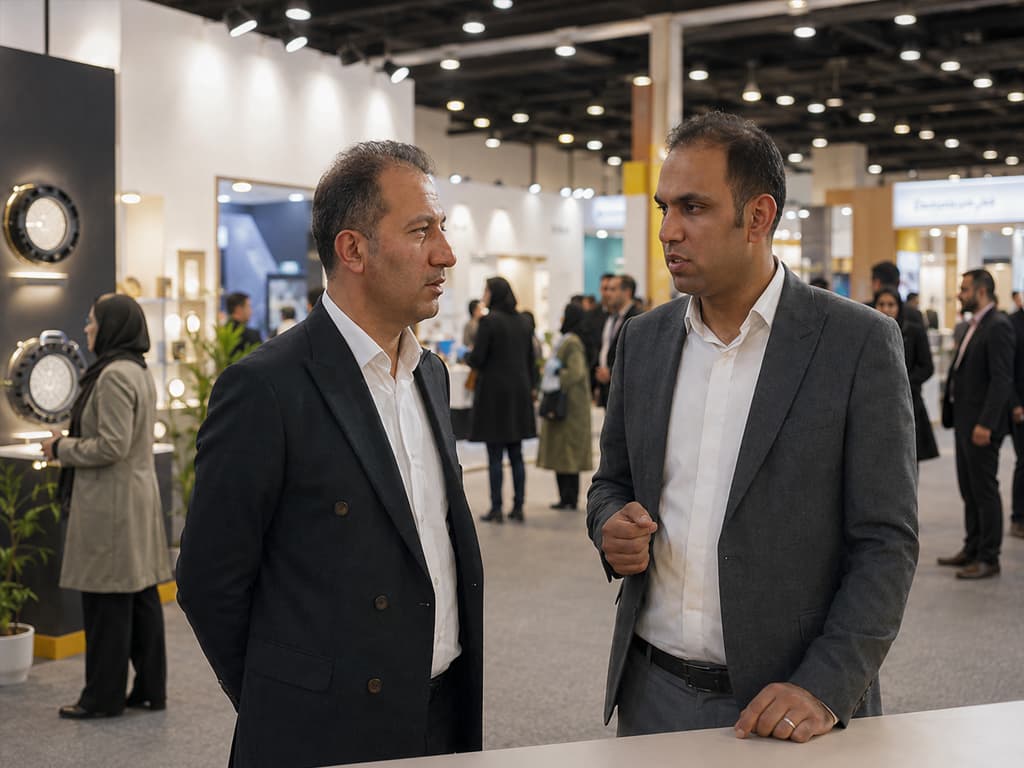
In heavy industries, where flammable gases, chemical vapors, or explosive dust are part of everyday reality, “safety” is no longer a choice; it is a vital necessity. In such environments, every electrical device — from a simple luminaire to distribution boxes and control stations — must be designed with a different logic: one that thinks not only about performance but about preventing incidents under the worst possible conditions.
As one of the established manufacturers of industrial lighting and electrical equipment, Golnoor has for years dedicated part of its engineering focus to explosion-proof equipment. The company's explosion-proof product portfolio is not limited to lighting alone; it encompasses an integrated range of explosion-proof luminaires, distribution boxes, local control panels, flanged enclosures, and ancillary equipment designed for work in high-risk industrial zones.
These equipment have been developed for use in environments such as refineries, oil and gas facilities, petrochemical plants, chemical factories, and spaces with a high risk of gas or dust explosion — environments where the smallest design or execution flaw can have serious consequences.
In such a context, examining Golnoor's approach to explosion-proof equipment without reference to the perspective of those directly involved in designing, selecting, and developing these products does not provide a complete picture. Part of this perspective is shaped in the decisions and considerations embedded in the technical and operational processes of this field.
In this regard, Adel Rabei, Head of Explosion-Proof Research and Development, emphasizing the nature of high-risk industrial environments, states that explosion-proof equipment should be considered a safety solution before it is a product — a solution that must operate continuously and reliably under the most demanding environmental conditions without creating additional risk.
Safety as the Starting Point of Design
On this point, Adel Rabei, referring to the nature of hazardous industrial environments, explains that the design of explosion-proof equipment begins from the outset with a key question:
How should this equipment behave under the worst possible conditions?
According to him, in Golnoor's explosion-proof division, safety does not simply mean passing standards; it means stable performance over time. Equipment that remains exposed to moisture, corrosive vapors, temperature fluctuations, and mechanical vibration for years must perform its function without creating a source of sparks or increasing temperature.
Rabei emphasizes that for this reason, material selection plays a key role in these products. Using copper-free aluminum and stainless steel in bodies not only increases mechanical and chemical resistance but also helps maintain performance stability under harsh environmental conditions. This is especially significant in the oil and gas industry and coastal or chemical environments.
A Complete Explosion-Proof Ecosystem
Continuing the conversation, Rabei points out that one of the main differences in Golnoor's approach is its systematic view of explosion-proof equipment.
According to him, many industrial projects require a combination of lighting, distribution boxes, and local control, and if these components are not aligned in design and standard, the overall system risk increases.
Accordingly, alongside linear and flood explosion-proof luminaires, Golnoor has also developed a range of explosion-proof junction boxes and local control stations. These equipment enable safe power distribution, cable connection, and process control directly in hazardous zones — without the need to transfer operations to more distant, lower-risk areas.
Rabei explains that in designing these equipment, special attention has been paid to details such as high IP protection ratings, proper sealing, cable entry paths, and external earthing capability. The goal has been for the equipment to create the lowest risk and highest confidence both during installation and throughout long-term operation.
Simple Maintenance, Continuous Performance
Another important topic in the conversation is maintenance and repair. Adel Rabei, referring to real conditions at industrial sites, says that stopping a production line to service an equipment is always costly. For this reason, in the design of many Golnoor explosion-proof products, efforts have been made to make access to internal components simpler and to allow servicing without fully opening or relocating the equipment.
He believes that a successful explosion-proof equipment is one that is not “troublesome” in practice — meaning its installation is clear and predictable for the execution team, and it does not require frequent intervention during operation.
A Long-Term View of Industrial Safety
In concluding this conversation, Rabei points to a key insight:
Explosion-proof equipment is usually noticed when it does not work correctly; yet the main goal is for it to go unnoticed.
According to him, the design philosophy in Golnoor's explosion-proof division is built on sustainable safety and uninterrupted performance. Equipment that may at first glance appear to be merely a luminaire, a box, or a control station, but in fact plays an important role in protecting personnel, industrial assets, and production continuity.
This perspective has led Golnoor's explosion-proof equipment to be defined not only as a product but as part of the safety infrastructure of heavy industries — infrastructure intended to perform its duty for years, silently and without incident.
The Development Horizon for Explosion-Proof Equipment at Golnoor
A systematic view of explosion-proof equipment is one of the main foundations of Golnoor's approach in this field. This approach is built on developing a coordinated product range that responds to the needs of various industrial projects not only in diversity but also in technical and functional alignment — from limited, localized facilities to large, complex, multi-layered industrial sites.
In recent years, Golnoor has sought to expand its explosion-proof equipment portfolio with a focus on factors such as selecting durable materials, engineered body design, high IP protection ratings, and ease of installation and maintenance. Together, these factors enable safe and stable operation of equipment under real and sometimes extremely harsh industrial environmental conditions.
Golnoor's development programs in the explosion-proof field are not limited merely to increasing the number or models of products. The main focus is on improving long-term performance, increasing flexibility in responding to the specific needs of each project, and moving toward more integrated solutions — solutions that can simultaneously address safety, execution, and operational requirements.
Given changing industry needs and increasingly complex industrial sites, the future of explosion-proof equipment is moving toward products that, while maintaining the highest level of safety, are simpler, more reliable, and more cost-effective over their lifecycle. Golnoor, on this path, relying on field experience, technical knowledge, and feedback from executed projects, is striving to play a more active role in raising operational standards for explosion-proof equipment.
In sum, explosion-proof equipment in this approach is defined not as standalone products but as part of the safety infrastructure of heavy industries — infrastructure whose duty is continuous protection of personnel, equipment, and processes, and which is intended to perform its role over the long term, uninterrupted and without drawing attention. This perspective charts the future development path of Golnoor in the field of explosion-proof equipment.