

Fereshteh Amini on Golnoor's Export Path | National Exemplary Exporter
An interview with Fereshteh Amini on Golnoor's renewed selection as a national exemplary exporter: entering foreign markets, understanding each destination, staying the course, and the challenges of export.
Fereshteh Amini on the Road to Export Growth
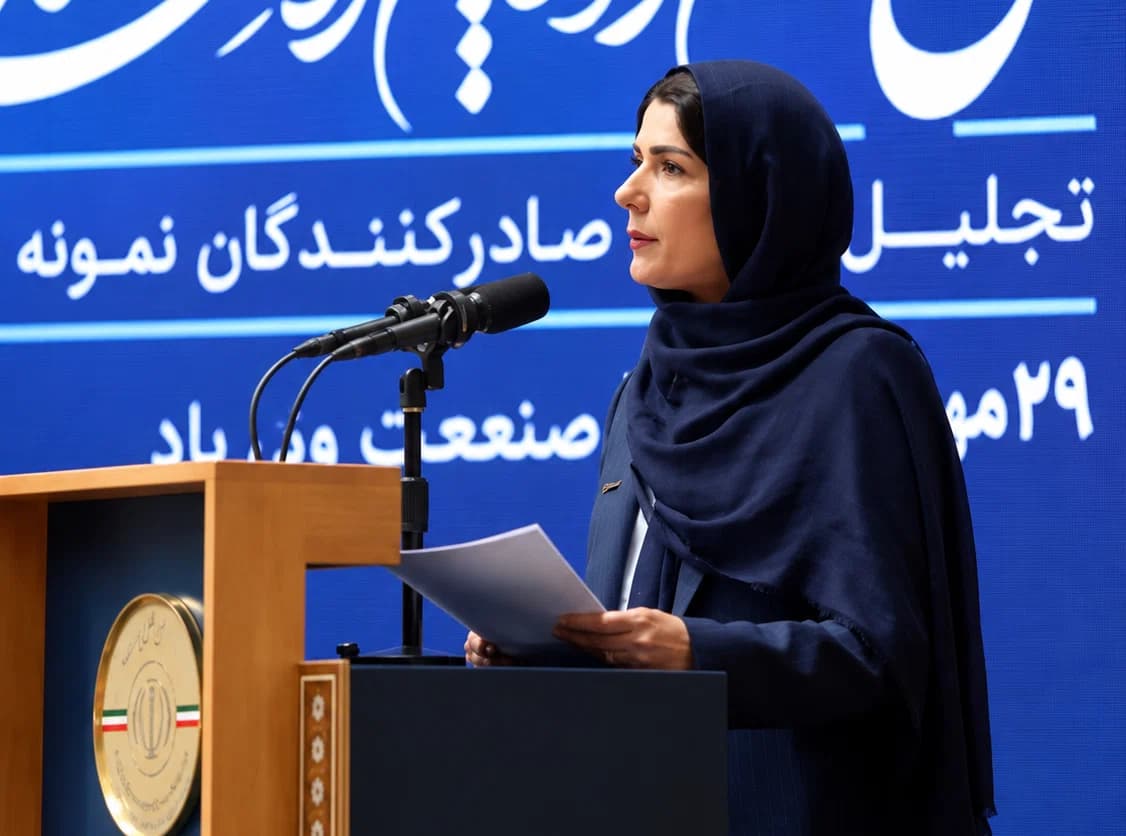
Fereshteh Amini is an industrial executive and international trade professional, a member of the Board of Directors of Golnoor, and Chair of the Export Development and Import Management Commission at the Isfahan Chamber of Commerce. She began her professional career in 1382 (2003–2004) in Golnoor’s International Affairs Department and subsequently took on responsibilities in foreign trade, market development, and business leadership. Her contribution to expanding Golnoor’s exports to more than 30 countries forms part of her professional experience in international trade.
Golnoor's renewed selection as a national exemplary exporter is an occasion to look back at the path the company has taken in foreign markets, a path that, according to Fereshteh Amini, began with entering the Saudi market and continued as the company expanded into other countries. Describing that experience, she emphasizes understanding customer needs and staying in the target market, and sees these two, alongside product quality, as essential to export success.
Amini explains that in the early years of Golnoor's export activity, international complications and sanctions-related problems were not as widespread as they are today. At the same time, the company's technical readiness and infrastructure had laid the groundwork for expanding exports. According to her, after entering Saudi Arabia, Golnoor went on to experience markets such as Turkmenistan, Yemen, Germany and Italy.
In explaining Golnoor's competitive advantage, she draws attention to the nature of relationships with business customers. Amini believes that in business-to-business markets, product quality must be accompanied by an understanding of the target market's standards and the buyer's needs. Reviewing prices suited to each market, and offering the right advice and pre-sales and after-sales services, are other parts of that relationship.
Amini says: “Alongside the need for quality, we have to know the standards of the target market, identify its needs and examine pricing appropriate to that market.”
Yet in her view, what brings this set of measures to fruition is continuity. Amini stresses that entering a market with a short-term view and expecting quick results is not enough to build a lasting business relationship. According to her, the company must stay in the market, follow up on the necessary work and keep its relationship with the customer going.
Emphasizing the same point, she says: “You cannot take a short-term view of a market and think you will get results quickly and then leave.”
Another part of Amini's remarks concerns the obstacles that make continued export activity difficult. Pointing to how widespread these problems are, she says the better question is where exporters do not face challenges. Financial transactions, the supply of raw materials and the fulfilment of international commitments are among the issues she cites.
Among these obstacles, Amini places greater emphasis on the lack of stability and the difficulty of predicting the future, an issue that limits the ability to plan continued cooperation with foreign customers. In her account, maintaining export markets requires constant follow-up, while the exporter must at the same time find solutions for financial barriers and for the needs of production.
The experience Amini describes in Golnoor's exports rests on one principle: a presence in a foreign market does not end with entering it. Understanding the standards and needs of each destination, serving the customer and sustaining the relationship are parts of a path that must continue after the first sale.